
If you work in construction, even a little bit, you may have heard of these two terms, shop drawings vs as built drawings. They talk about them as if we all know their differences. But the truth is, many contractors, particularly the newer ones, confuse them or use them interchangeably. They don’t. And that confusion? It can lead to lost time, money and many times reputation. Let’s sort this out. Only practical knowledge you can put to use on the job or use in preparation for one.
Shop drawing services are about the time before the start of construction. But they communicate design intent and make it actionable.
These are like the hiccups between design and build.
They are typically drawn by contractors, fabricators, or specialists. Beyond design drawings. Way deeper. There will be precise measurements and materials, connections, how to install and sometimes even how to sequence the process. Well, here’s the thing. Architects don’t always go that far. They shouldn’t have to. Enter shop drawings. For instance, in shop drawings ductwork isn’t just represented by a line. The drawing shows where the duct is, the bends and supports. All the information a fabricator needs to implement. The same for installation drawings. These demonstrate how the systems come together on the job site, clearances and interfaces with trades. Without shop drawings, we have to guess. And guessing on a construction site? Not a great idea.

Let’s start again.
When a project is complete, things don’t line up with the original drawing. Changes happen. Site conditions shift. Changes are made on the run. This is where as built drawing services can help.
These drawings reflect how it was actually built. Not what was planned. Not what was intended. The real deal. They’re generated by revising drawings in response to changes in the field, redlined markups, and verification. That’s why they’re also known as construction record drawings. And they are not as insignificant as you might think. Facility managers use them. Maintenance teams rely on them. Renovations rely on them. As-built errors can be costly in the long run. You know, trying to fix a plumbing problem when you don’t know where the pipes go. Yeah. That’s the problem.

This is where most confusion clears up. Shop drawings vs as built drawings comes down to one simple idea:
Shop drawings show how things should be built.
As-built drawings show how things were actually built.
That’s it. But also not that simple. Because both play completely different roles in the construction documentation process. Shop drawings are proactive. They prevent mistakes before they happen. As-built drawings are reactive. They record what happened so future work stays accurate. Both are critical. Skip one, and you’ll feel it somewhere down the line.
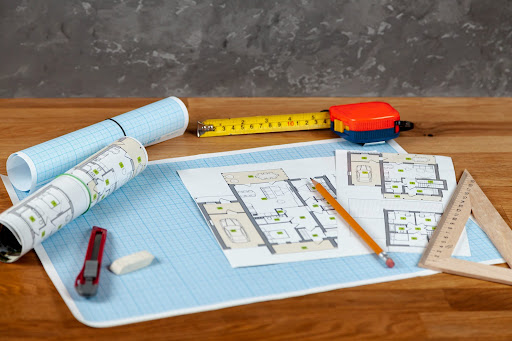
In a typical construction documentation workflow, shop drawings come in after design approval but before actual installation. They go through reviews. Sometimes multiple rounds. Engineers, consultants, contractors all check them. Because once approved, they become the reference for execution. And here’s something people don’t talk about enough. Good shop drawings reduce conflicts between trades. Mechanical doesn’t clash with electrical. Plumbing doesn’t interfere with structure. Everything fits, at least on paper, before it reaches the site. That’s why strong drafting services USA providers, like Antenity, focus heavily on coordination at this stage.
Because fixing issues on paper is cheap. Fixing them on-site? Not so much.

As-built drawings step in toward the end. During or after construction. They capture all the adjustments made during execution. Maybe a pipe shifted. Maybe a wall moved slightly. Maybe equipment changed.
All those changes get recorded. And this becomes part of project closeout documentation. This documentation isn’t just for record-keeping. It’s for long-term usability of the building. Maintenance teams rely on it. Future contractors depend on it. Even owners use it for asset management. Without accurate as-built drawings, buildings become harder to manage over time.
Here’s the honest part. A lot of contractors rush through documentation. Or treat it like paperwork that just needs to be done. But ignoring the difference between shop drawings vs as built drawings creates problems.
Without proper shop drawings:
You risk installation errors. Misalignment. Rework. Delays.
Without proper as-built drawings:
You create long-term confusion. Poor maintenance. Expensive future modifications.
And both impact your credibility. Clients notice when documentation is clean and reliable. They also notice when it’s messy or missing.
One of the biggest challenges in construction is the gap between design and execution. That’s exactly what this comparison highlights.
Shop drawings represent design refined for execution.
As-built drawings represent execution documented for reality.
This difference between design vs final conditions is where many project issues live. Bridging that gap requires both accurate detailing before construction and honest documentation after. And that’s where experienced teams stand out.
At Antenity, both shop drawing services and as built drawing services are handled with real construction understanding. Not just drafting. Not just software work. Actual coordination. Practical detailing. Field-aware documentation. Because drawings aren’t just documents. They’re decisions on paper. From fabrication drawings to construction record drawings, the focus stays the same. Accuracy, clarity, and usability. And that’s what makes the difference between smooth projects and constant problems.
Documentation can easily be pushed aside as time-critical, budget-critical and task-critical. But the truth is this. Great projects are well-built. They’re documented well.Knowing the differences between shop drawings and as built drawings isn’t just important for technical reasons. It’s an essential component to quality construction. And whether you want to avoid rework, boost coordination and hand-over a piece of work that makes sense in a few years’ time… you need to know this.
If you need accurate and coordinated construction documentation, Antenity can help. Whether it’s shop drawing services or accurate as built drawing services, it’s about getting it right, and working from there. Send your plans. Discuss your scope. Working plans that make a difference on the job site and in the future.
Shop show how systems will be fabricated; once the project is constructed, as-built drawings are created to show what was actually installed.
They are usually required, particularly when fabrication or MEP systems are involved or complex systems are installed. They’re essential for pre-construction accuracy.
Usually contractors or drafters update drawings using site changes, redlines and inspections.
They contain information about systems, helping support maintenance, repairs and renovations.
No. Shop drawings are prepared before the building is constructed while as-built drawings are prepared after. They have a different purpose.


Monday – Friday: 9:00 AM – 5:00 PM
Saturday – Sunday: Closed
15750 Fair Hill Way Apple Valley, Minnesota 55124, USA
Stay updated on our latest projects, tips, and offers.
Copyright © 2026 All Rights Reserved The Marketing Manic
