
The failure of construction projects is hardly ever due to a single error. It is typically a number of minor coordination problems which accumulate with time.
A duct collides with a beam.
One of the pipes is installed within a cable tray.
An electrical panel is installed where it is not supposed to be installed.
Then comes the rework. Time gets wasted. Costs go up. Groups begin to finger. And frankly speaking this is where BIM coordination services transform it. Since you do not need to find out the issues at the sites, BIM assists you to spot those issues before you even start the construction.
Coordination is not something to sneeze at. You have got architects, structural engineers, MEP designers, contractors. all working on the same project but they may have different drawings and systems. Despite effective communication, there are gaps that occur. Drawings do not necessarily coincide. Revisions get missed. Details overlap. And when these problems get to the building stage they become physical confrontations. That is where design conflict detection is of the essence. These conflicts remain concealed without an effective coordination process until the beginning of the installation. And at that point, it is costly to repair them.
In its simplest definition, the BIM coordination services integrate all the disciplines of the project in a single 3D model. Teams operate in a collaborative space with architectural, structural, and MEP systems merged together, rather than looking at individual drawings. This is commonly referred to as model based coordination. This is where the interesting part comes in.
Conflicts are observed as soon as all systems are combined into a single model. You do not have to imagine the interaction of systems. You can see it. It is that visibility which lessens errors.

Clash detection BIM is one of the most potent components of BIM coordination. This is done to determine physical conflicts amongst systems. As an illustration, a duct that passes through a beam, or a pipe that enters an electrical conduit. These conflicts are indicated early on, way before construction starts. And repairing them on the computer? A lot easier than repairing them in place.
In on-site, you have to deal with labor delays, material variations, and schedule interruptions. However, within a BIM model, the process of making changes is fast and will not influence construction schedules. This is why the reduction of construction rework can be directly associated with clash detection.
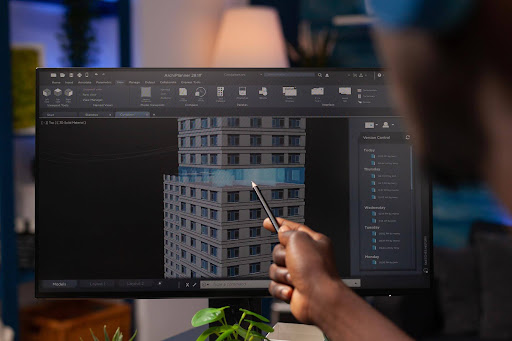
In case there is one aspect in which BIM coordination is worth its weight in gold, it is in MEP systems. Mechanical, electrical and plumbing systems are intricate. They move in narrow corridors and come into contact with buildings at all times. This is why MEP coordination BIM is so important in contemporary construction.
MEP installations have the tendency to either clash with other structural parts or with each other without coordination. That brings about some changes in the course of installation that make it drag. In BIM, these systems are synchronized digitally prior to the commencement of installation. Optimization of duct routes. Path lines on the pipes are changed. Electrical layouts are made congruent. And as we begin to build, all things come together.
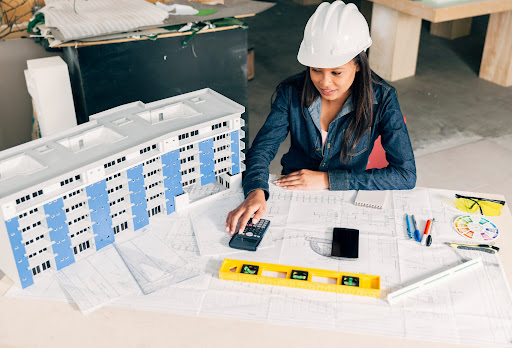
Prior to the possibility of coordination, there must be a model. That’s where BIM modeling services come in. These services produce detailed 3D models of building systems, such as the architectural layout, structural elements, and MEP components. The quality of these models is critical in the quality of coordination. Correct models result in correct coordination. Missed conflicts are caused by poor models. This is the reason why knowledgeable BIM teams are concerned with the development of comprehensive, accurate, and models that mirror the actual construction scenario. Since coordination can only be as good as the model.
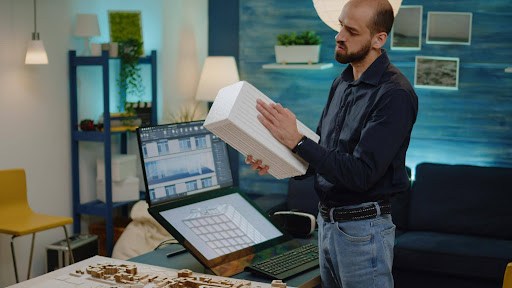
Construction projects have a number of stakeholders. And coordination does not only concern systems, but people. That’s where BIM collaboration tools play a major role.
These tools enable project teams to pursue models collectively, monitor problems and communicate changes in real time. Teams do not have to use the old-fashioned drawings or lengthy email chains but operate in a common digital world. This facilitates the multidisciplinary collaboration in which the architects, engineers, and contractors can coordinate their activities in a more efficient way.
And with better communication, coordination is a natural by-product.
BIM doesn’t work in isolation. It relates to various phases of the construction process.
By integrating BIM, it is possible to plan, schedule, estimate costs, and execute using models. This generates a more streamlined work process. As an example, sequencing of construction can be aided by coordinated models, which assist teams in understanding in which order systems need to be installed. This minimizes confusion on-site and enhances productivity. And when clear work flows, error goes away.
Now, we can discuss the actual advantage that everybody is interested in. Money. Rework is expensive. It consists of the removal of installed work, replacement of materials, and re-work. It also influences the project schedules. BIM helps in construction rework reduction directly by enhancing coordination.
Less conflict translates to less surprise.
There are less surprises that lead to delays.
Less delay will imply improved cost management.
It’s a simple chain reaction. And it begins with improved coordination at the stage of planning.
Coordination isn’t just about avoiding problems. It also helps in improved project management. By utilizing BIM project management a team may monitor the progress, coordinate problems and ensure that all disciplines are kept in line during the project life cycle. This brings about increased predictable results. And to be truthful, predictability is what all the contractors cherish. Since when projects are running smoothly, things will be simpler. Organizing, planning, interaction with clients. Everything becomes better.
There are still individuals who believe that BIM is all about 3D modeling. It’s not. This is only the beginning of modeling. Coordination, collaboration and integration are the true values.
The other myth is that BIM gets rid of all the problems. It doesn’t. But it diminishes them greatly. Particularly the type that results in expensive rework. And that’s what makes it so valuable.
Coordination takes time, the necessary tools, and a well-organized method.
Antenity offers professional BIM coordination services, such as detailed modeling, clash detection BIM, and MEP coordination support. Their team constantly collaborates with contractors, engineers, and project managers with the aim of identifying conflicts at the initial stage and addressing them before the construction process starts. This assists in minimizing risks, enhancing efficiency, and making project implementation smoother.
Construction does not necessarily need to be disorderly.
The majority of the coordination problems can be avoided. They simply have to be recognized at an early age. This is what BIM coordination services are. They make you visible. They provide you with power. And they assist you in the type of errors that result in time and money wastage. So you preempt issues rather than resolve them. And that is a far better way to construct.
BIM coordination services are the plan to put together various building systems into one model to detect conflicts and enhance project alignment prior to construction.
Clash detection BIM is a 3D model that detects physical conflicts between building systems, including ducts, pipes and structural elements.
BIM eliminates errors that are likely to be corrected in the construction as BIM identifies the problems beforehand through model based coordination.
MEP coordination BIM is used to make sure that the mechanical, electrical and plumbing systems are correctly coordinated to minimize conflicts and delays in installations.
Yes. BIM collaboration tools enable project teams to interact, analyze models and solve problems using a common digital space.

Monday – Friday: 9:00 AM – 5:00 PM
Saturday – Sunday: Closed
15750 Fair Hill Way Apple Valley, Minnesota 55124, USA
Stay updated on our latest projects, tips, and offers.
Copyright © 2026 All Rights Reserved by Antenity
